Last updated: May 2026
Your store is up and running. Sales are steady. But the stream of new revenue has slowed to a trickle, and growth feels stalled. An eCommerce growth strategy that restarts that momentum starts with diagnosing exactly where it stopped. The three usual culprits: marketing spend that's lost its ROI, traffic that arrives but doesn't convert, or one-off purchases that aren't producing repeat customers. And each has a different fix. Here's how to identify which pattern you're seeing in your store, and what to change in each case.
Six areas to investigate when eCommerce growth has plateaued:
Here's the good news: you're not alone. Many established eCommerce businesses start strong but struggle to keep the new sales coming. If that sounds like you, the six moves below can help push past the plateau and rebuild sustained growth.
Intrusive, scattershot attempts at lead generation may put plenty of eyes on your business, but they're unlikely to drive sales. To find the right audiences — the ones who actually convert — you need to fuel your marketing with strategic, data-driven targeting.
You probably already have more information about your customers than you realise. The tools available through your store collect signals about how customers shop, what they engage with, and what makes them buy. Cookie-based tracking still works, but it's becoming less reliable as browsers and privacy regulations tighten. The shift to first-party data isn't a cliff anymore — Chrome's plan to deprecate third-party cookies was paused in 2024 — but the signal quality erosion is real. Building your own data is still the right play.
Try incentivizing form and email submission so you have more data to work with. Offer a free download or coupon code to bring customers onto your mailing list. Run a post-purchase survey to better understand what buyers want from your business after the sale. These are the building blocks of an audience model you can actually act on.
With the right analytics setup, you should be able to identify what's worked particularly well in previous campaigns and adjust accordingly. Most stalled-growth situations trace back to a measurement gap — the team has Google Analytics, Meta Ads, the email platform, the CRM, but they don't talk to each other in a way that produces a unified view of how customers actually move from first impression to repeat purchase.
Conduct industry research to understand what sets you apart from competitors, and lean into those strengths. Take the same approach on your site itself to understand where visitors who don't make a purchase are stumbling on their way to a sale. From there, you can work to remove points of friction and turn more visitors into buyers. Our companion piece on how to organize your eCommerce store is the next read if friction is showing up in the checkout flow specifically.
That information will help you personalise both prospecting and remarketing. Your campaigns — and your customer journeys — get more effective as a result.
A simple shift in perspective can unlock new opportunities for growth. If you find yourself stuck in a rut, consider diversifying your marketing channels and exploring new avenues for generating leads. That could mean partnerships with influencers, expanding into channels like Walmart Connect or Uber Eats Ads, audio ads on Spotify, or social channels like Reddit and TikTok Shop. If your customer research reveals you have a prospective audience somewhere you don't have ads, it's probably worth dedicating some of your budget to those channels.
The right eCommerce advertising agency can help you audit your current channels and assess the options available. From there, you can decide which ones align best with your goals and budget. Our work with OUAI is a good example of what a deliberate channel pivot can produce — a 63% increase in customer acquisition from rebalancing paid media around what was actually working.
Whichever channels your campaigns run on, remember that proper SEO is table stakes. Organic search consistently delivers the highest ROI for eCommerce websites, but the ever-changing algorithm means your site's SEO needs periodic updates. Our piece on why SEO best practices are now must-practices for eCommerce covers the current playbook.
Of course, not all big wins happen right away.
Building winning eCommerce advertising won't always be immediate. Struggles with new campaigns are an opportunity to learn and optimize. Don't be afraid to experiment with your eCommerce ads.
Gathering data about customer behaviour is essential for making informed decisions about how to drive growth, but sometimes the only way to get results is by testing different strategies until you find one that works. Run experiments around pricing models, content formats, product offerings, and creative direction. See what resonates with your target audience.
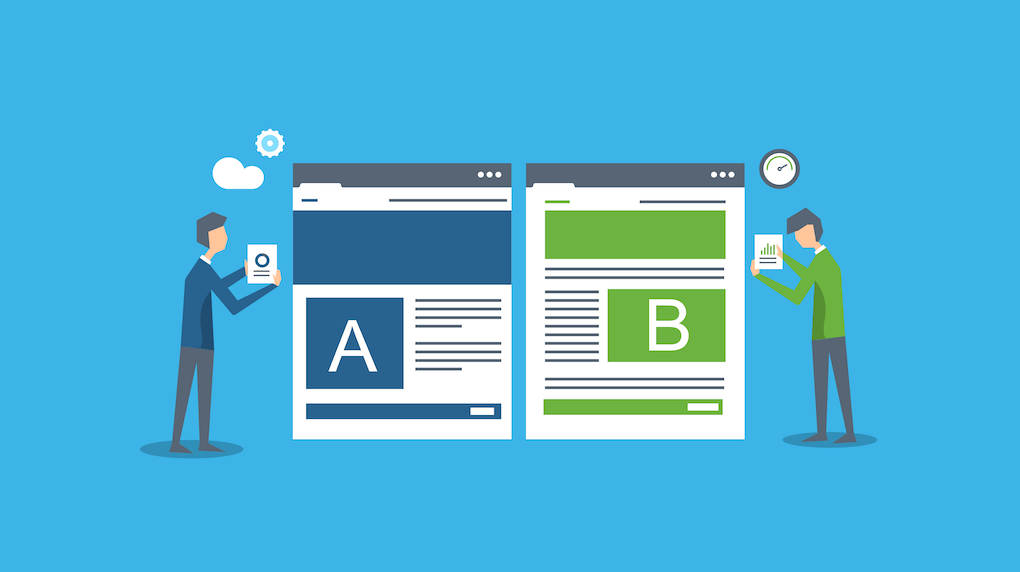
Most paid platforms incorporate some form of built-in optimization, but they can only work with the copy, creative, and inputs you provide. A/B testing different creative options — or regularly refreshing campaigns and creative — keeps audiences engaged and paints a clearer picture of what's working. This kind of structured experimentation can open up new growth in unexpected places.
Once you've won that first purchase, don't let up. It's one thing to bring new customers into your business; it's another thing entirely to keep them coming back. Building retention strategies and nurture campaigns keeps existing customers loyal and engaged. It also gives you the opportunity to upsell with added value — and encourages customers to build a relationship with your brand, which leads to advocacy and positive word of mouth. Both of those compound when you're trying to win new audiences.
How do you win them over?
Consider loyalty programs or discounts for repeat purchases. Create ongoing value for customers throughout their lifecycle with your brand. Maybe they get early access to new sales, or you reward them for leaving reviews. Maybe you build out a content strategy that delivers relevant blogs or videos to loyal customers on a regular basis.
If your customers are happy with your products and services, give them a place to talk publicly about it. Does your business have an active social media presence? Moving beyond Facebook ads and building a robust organic social strategy helps build brand affinity and a stronger connection with your customers.
You don't have to add all of these tactics at once. The right touchpoints and nurture journeys can turn first-time buyers into loyal customers — and eventually into brand advocates that drive more growth for your business. The bigger framework for all of this is in our piece on the five eCommerce strategies that compound over time, with the customer-journey layer in the full-journey eCommerce experience.
There may not be a single silver bullet for restarting your growth. A combination of these strategies is usually what it takes to get an eCommerce business back on track — and the right combination is different for every store. The work is identifying which of the six areas above is actually the bottleneck for you, and starting there.
If you're looking for an eCommerce agency that can help find the source of slowed sales and rebuild the lever that restarts growth, our team can find clarity in the chaos for you. Take a look at our eCommerce strategy services, or marketing analytics services if measurement is where the growth signal is being lost.
Stalled eCommerce growth almost always traces back to one of three causes: an acquisition channel that used to work has decayed, your measurement infrastructure isn't giving you a clear picture of what's actually driving sales, or retention has lagged so far behind acquisition that you're filling a leaky bucket. Diagnosing which one is true for your store is the first step toward restarting it.
The strategies that consistently move the needle for plateaued eCommerce businesses are: investing in first-party data and audience understanding, diversifying channel mix beyond the obvious paid social and search, structured A/B testing of creative and offers, retention email and SMS sequences targeting existing customers, and SEO investment that keeps organic traffic compounding. Different stores need different combinations of these — diagnose before you commit to one.
Three foundations matter most. First, your measurement layer needs to capture clean first-party data from every customer touchpoint. Second, your retention engine — email, loyalty, post-purchase content — needs to be working before you scale acquisition. Third, your team needs the operational discipline to run structured tests rather than one-off changes. Get those three solid and growth becomes a question of where to point the spend.
The biggest unspent gains usually live in three places. First, improving on-site conversion rate so you get more from the traffic you already have. Second, building retention sequences so first-time buyers turn into repeat buyers. Third, fixing the measurement layer so your existing campaigns can optimise on better signal. Together, these three usually generate more growth than the next ad-spend increase.
A scalable platform handles your current traffic, supports the integrations your stack needs (analytics, email, CRM, ads), and lets your team make updates without engineering bottlenecks. Watch out for platforms that look cheap up front but accumulate costs as you grow — apps, transaction fees, hosting upgrades, custom-development hours. For most growing eCommerce brands, Shopify, Adobe Commerce, BigCommerce, and WooCommerce are the platforms worth comparing.
Profit-focused eCommerce growth means moving your KPIs from revenue and ROAS toward contribution margin and customer lifetime value. Use Customer Match audiences to lower acquisition costs on your highest-LTV segments. Set bid strategies to "Maximize Conversion Value" with target ROAS rather than chasing volume. Build retention sequences that increase repeat purchase frequency. Cut spend on channels that produce volume but not profit.
Map your growth horizon (12, 24, 36 months) against the platform's ability to support it. Look at total cost of ownership, not sticker price. Audit the third-party app ecosystem to make sure the integrations you'll need are available and well-maintained. Talk to brands at the scale you're growing toward and ask what they wish they'd known. Our piece on reviewing eCommerce platforms is the deeper companion read.
The better the data you look at, the better the decisions you'll make.