Most rebrand rollouts are planned around a launch date, and that logic still holds for everything you control. But it breaks down for everything you don't, and a growing share of how your brand is understood now lives there.
A modern rebranding strategy has two distinct systems to manage: SEO migration, which most teams have a checklist for, and AI brand visibility, which most don't. The two don't respond to the same work, and they don't sync automatically. Get the sequence wrong and conflicting signals cost you twice: the wrong story for prospects who know your name, and no story at all for those who don't yet. What follows is a five-phase framework for managing both in sequence, starting eight weeks before launch and continuing through the six months that follow.
The SEO migration side of any rebranding strategy is well understood. Get the 301 redirects right, preserve your backlink equity, make sure Google re-indexes the new pages correctly. That work is largely within your control and responds quickly to the right fixes. AI visibility is a different challenge entirely.
AI recognition runs on something you mostly can't control: how consistently your brand is described across sources you don't own. Directory profiles, third-party publications, earned media, Wikidata, and the language people use about you wherever you turn up. You can run a flawless migration on your own domain and still spend months watching AI tools introduce your company with a three-year-old press release, because none of that technical work touched the places they're actually reading.
Those sources don't carry equal weight. AI tools lean hardest on the ones they trust most, and major publications and Wikipedia sit at the top; one analysis of ChatGPT's citations found Wikipedia alone accounted for close to half of its most-cited domains. Your own website comes next. Secondary profiles like LinkedIn, Clutch, Crunchbase, and Google Business Profile follow. Then the broader footprint: directory listings, mentions in partner content, bylines, podcast appearances, and old press coverage.
That weighting is the problem with organizing a rollout around internal readiness: the website, the PR push, and the media campaigns. If you update your own site first but the high-authority third-party sources don't update for weeks, you've opened a window of signal incoherence at the exact moment search volume around your brand is highest.
The new principle is: sequence by source weight, not by launch date. Prioritize high-authority external sources early, even if the internal rollout is still in progress. There's a reflex in a rebrand to change everything at once. Resist it. AI knows your company as a handful of steady facts: your industry, your location, your rough size, the companies it lists next to yours. A new name doesn't change any of that, and those facts are exactly how a tool recognizes that the old you and the new you are the same company. Leave them alone. Change what actually changed, and let the signals that are still true carry your history forward.
|
Pre-AI approach |
AI-era approach |
|
|
Systems to manage |
SEO migration |
SEO migration and AI brand visibility |
|
Sequence logic |
Organized by operational convenience |
Sequenced by source weight |
|
Third-party sources |
Updated when practical after launch |
Pre-launch priority from week seven |
|
Schema markup |
Good SEO practice |
Critical AI entity signal |
|
Knowledge Panel |
Brand reputation management |
Brand reputation and AI citation source |
|
Wire release |
Media distribution |
Media distribution and AI citation anchoring |
|
Post-launch window |
30 to 60 day transition tolerated |
Six-month sustained signal management |
|
Success measurement |
Organic traffic and redirect health |
Plus monthly AI brand recall monitoring |
The phases below are ordered by when they need to begin, not by how long they take. Phases 1 and 2 run in parallel for most of their duration. Phase 3 starts later but must complete before the public launch.
Begin: eight weeks before launch. Complete: two weeks before launch.
The day your new brand goes live is the day AI tools and search engines start indexing the gap between old and new. If the technical foundations aren't ready before that moment, you're leaving holes that can take months to close.
The technical checklist is the same one it's always been. What has changed is the margin for error. The work in this phase is to get it all built and staged, ready to deploy the moment the site flips rather than pieced together afterward. 301 redirects mapped from all old URLs to their new equivalents, prioritizing pages with high traffic and strong backlink profiles. Organization schema ready to go sitewide: new name, logo, description, and sameAs links, the structured signal that tells both search engines and AI tools what your entity is. New meta titles and descriptions written for all key pages in consistent brand language. Canonical tags reviewed. Owned profiles prepared and queued, including Google Business Profile, the LinkedIn company page, and every social bio.
The less obvious task is your content library. Every high-performing page that still confidently describes the company you used to be is working against you. Not because it will confuse your human visitors, but because it's exactly the kind of authoritative, well-linked content AI tools reach for when someone asks who you are. Update what still has value. Remove what doesn't.
Begin: seven weeks before launch. Directory profiles staged: one week before launch.
Most teams treat this phase as post-launch housekeeping. That's the mistake.
Publication outreach is where the timeline gets tight. Getting a journalist to update an old bio is not a one-email job. It takes three to six weeks of polite, persistent follow-up, which means briefing your PR agency and starting outreach in week one of this phase, not the week after the announcement goes out.
Wikipedia and Wikidata are worth pausing on, and most marketing teams have never touched either. If a Wikipedia page exists for your organization, it's the single highest-leverage source to get right: it's the most-cited domain ChatGPT draws on, and AI tools often paraphrase a company's Wikipedia summary almost word for word. Update it carefully and within Wikipedia's rules, because promotional editing gets reverted and can backfire. Wikidata does a different job. It feeds the entity disambiguation that helps AI tools connect your old and new names to the same organization, and it's the practical fallback if you don't meet Wikipedia's notability bar. Edits to both take time to propagate, so make them early. Directory profiles on Clutch, G2, Crunchbase, and any industry-specific platforms should be prepared and staged for launch-day activation, not added to the post-launch to-do list.
When Major Tom rebranded Corix following an acquisition, the company shed its former divisions to emerge as a focused thermal energy company. When we recently checked how AI tools describe them, they're getting it right. No dedicated AI visibility protocol was run at the time. A well-executed rebrand creates the conditions for AI to get it right on its own: a clear new identity, a clean content strategy, a properly built website. That's good news. It's also not a plan. At enterprise scale, and especially when timeline matters, counting on a clean rebrand to make AI catch up on its own isn't a strategy you can rely on.
Begin: four weeks before launch. Complete: one week before launch.
AI tools don't distinguish between an employee's LinkedIn post and a company press release. Both are content. Both get indexed. A 500-person organization that goes public on a Monday while half the team is still updating LinkedIn titles and posting about "our exciting rebrand" creates a window of fragmented signals at the worst possible moment. Those posts hit the index before the earned media does.

Four weeks before launch, send the internal playbook: new brand name, approved descriptors, copy-paste LinkedIn bio language, and "formerly known as" guidance for the transition window. Run the town hall and actually explain why it's happening. The practical goal is straightforward: every employee profile and bio updated the week before the launch, not during it. Launch week is already busy enough.
Launch day.
Everything you staged in Phase 1, the redirects, schema, meta titles, and owned profiles, goes live the moment the new site switches over, along with the directory profiles staged in Phase 2 . Submit Google Knowledge Panel corrections alongside the updated schema to start the re-indexing process.
The announcement goes out at the same time, on the wire. A wire release does more than get the news out: it puts a dated record of the change on a lot of indexed sites at once, which hands AI tools a clear source to cite for the transition right when they're most likely to run into your new name. Write the canonical brand description deliberately: it's the language you want AI to extract and cite.
AI tools cross-reference. Your own schema and content make a claim about who you are; third-party coverage is what corroborates it. A rebrand announcement that generates no press coverage gives AI nothing to cross-reference against, which means your claim stays uncorroborated and your competitors' don't. Brief your PR team to target publications that AI draws from heavily: industry trade press, major business publications, and relevant niche outlets with genuine authority in your space.
Use "formerly known as [old name]" in the launch announcement and all external content for three to six months. The construction does double duty: it's a courtesy to audiences who knew the old name, and it's the textual bridge that helps AI tools resolve the old and new entities as the same organization. Explain why the brand changed, not only what changed. Human readers want a reason to trust the transition; AI tools need the context to correctly connect who you were with who you are now.
Begin monitoring: four weeks after launch. Structured review: six months after launch.
The most common post-launch mistake is treating the rollout as a project with an end date. AI tools don't learn a new brand identity from a single launch event. They learn it from the accumulated weight of consistent signals over time. A brand that goes quiet after launch will watch its AI picture drift back toward whatever older content is most authoritative.
Begin monthly monitoring four weeks after launch, using the baseline query set you'll establish before launch (covered in the next section). Tools like Profound and Peec track brand mentions across ChatGPT, Perplexity, and Google AI Overviews; the category has matured quickly over the past year, so the tooling is worth a look even if you start with a manual log.
The temptation after launch is to declare victory and move on. Don't. The launch burst of press attention is the moment to build on, not to stop. Keep publishing content in consistent brand language. Audit employee LinkedIn profiles every couple of months for stragglers still using old titles. They exist at every company, and they matter more than you'd think. The six-month review should answer one question honestly: has the AI signal stabilized, or is legacy content still pulling the picture backward? The answer determines what ongoing effort looks like from there.
Measuring SEO performance after a migration is familiar ground: organic traffic to key pages, crawl error rates, and the percentage of high-authority backlinks correctly redirected. Your analytics setup probably already handles most of it.
AI brand visibility is less settled. There's no industry benchmark for what good looks like, no standard dashboard, and no percentage to hit. What you can do is establish a baseline before launch by running a standard query set across ChatGPT, Perplexity, and Google AI Overviews: "Who is [company]?", "What does [company] do?", and "Who are [company]'s competitors?" Document what each returns, then run the same set monthly. Track direction: are AI tools describing the right company, the right services, and the right positioning, and is that picture becoming more consistent over time?
The less obvious reason to do this: it's the evidence that lets you tell the story internally. A month-over-month log of AI responses moving from fragmented to accurate is a more credible account of rollout success than a launch-day announcement that the new website is live. Most marketing leaders find they need that kind of evidence sooner than they expected.
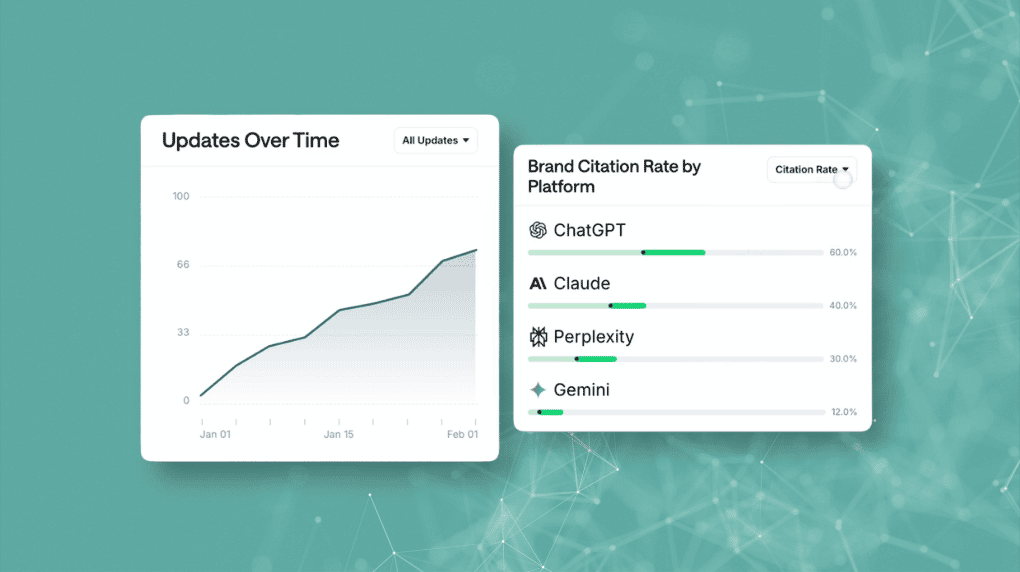
The most important decisions in a rebrand rollout are made before launch: which sources to prioritize, in what order, and by when. Most of the confusion that follows a rebrand traces back to those decisions, not to anything that happened on the day itself.
Major Tom builds brand strategy, creative, and websites for complex organizations, and manages the rollout work that follows. If you're planning a rebrand and want to think through what the rollout should look like before you're in the middle of one, that's a conversation worth having early.
There's no fixed timeline, and that's the core challenge. AI tools update at different rates depending on training data cycles and real-time retrieval capabilities. Some may reflect changes within days if high-authority sources are updated quickly; others may take months. Plan for AI recognition to be a six-month project rather than a launch-day outcome, and build your content and earned media strategy with that timeline in mind.
If the change is genuinely limited to visual identity: logo, color palette, typography, with no changes to the company name, tagline, service descriptions, or brand positioning, the AI risk is lower. Your entity information hasn't changed, so AI tools have less reason to become confused.
SEO rebranding focuses primarily on your own domain: redirects, indexation, canonical tags, and backlink preservation. AI brand visibility work focuses on how your entity is described across the entire web, including sources you don't control. The two overlap. A well-optimized website helps both, but AI visibility specifically requires updating third-party sources like directories, earned media placements, and Wikidata that traditional SEO work often doesn't touch.
Delete content that no longer reflects who the company is and has no backlink equity worth preserving. Update content that still performs well but references the old brand name or positioning. The outcome to avoid is a high-traffic, authoritative page that confidently describes the company you used to be. That's the content AI tools are most likely to cite when someone asks who you are.
Significantly. A name change requires AI tools to learn a new entity from scratch, or correctly link the new name to the old entity's history. A positioning refresh changes what's said about an existing entity. Name changes demand faster, more comprehensive action on high-authority third-party sources, especially Wikidata and any Wikipedia entries, because entity resolution is harder than entity updating.
For three to six months following a name change, use "formerly known as [old name]" in external content, press releases, and high-visibility placements. This creates a textual bridge that helps AI tools resolve the old and new entities as the same organization. Use it deliberately and clearly. The goal is to make the connection obvious, not to apologize for the change. If the context makes the relationship clear without the parenthetical, use your judgment.
For traditional SEO, 301 redirects pass link equity and protect organic rankings during a domain or URL migration. For AI visibility, redirects alone aren't enough. AI tools pull information from across the web, including third-party sites that link to your old URLs and still describe your old brand in their own copy. Redirects handle the technical signal to Google. They don't update the text on a trade publication's website that still introduces you by your former name.
Yes, arguably more than large brands. Well-established companies have extensive third-party coverage that provides corroboration even when individual sources lag behind. Smaller brands have fewer authoritative sources to draw from, which means each one carries proportionally more weight. An inconsistency that a large brand can absorb may meaningfully distort how AI describes a smaller one.
If you do only three things, do these. Update the highest-authority third-party sources, especially any Wikipedia and Wikidata entries, before launch rather than after. Publish one canonical brand description and keep it identical everywhere it appears, from your schema to your directory profiles, so AI tools resolve a single consistent entity. And keep producing content in the new brand language after launch, because AI visibility responds to sustained, consistent signals rather than a single launch-day push. The common thread is consistency across sources you don't own, which is exactly the part traditional SEO doesn't reach.
Creating complexity is simple. Crafting simplicity is complex.