Your website has a carbon footprint, and most sustainability-minded brands have never measured it. Every page view spins up servers, transfers data across networks, and burns battery on a user's device. According to the Offset, the average medium website emits roughly 4,800kg of CO2 per year which is the equalilivant of 40,000km driven in a car. Digital sustainability is the practice of measuring and reducing that footprint. This guide covers how it works, how to measure your own site's carbon footprint, and which performance levers cut emissions fastest.
The digital sustainability playbook, in three moves:
If your brand publishes a sustainability report but has never audited its digital footprint, you're not alone. The good news is digital sustainability is one of the most actionable categories on the list, because the work that reduces emissions is the same work that improves speed, SEO, and conversion.
When someone loads your site, three layers consume energy:
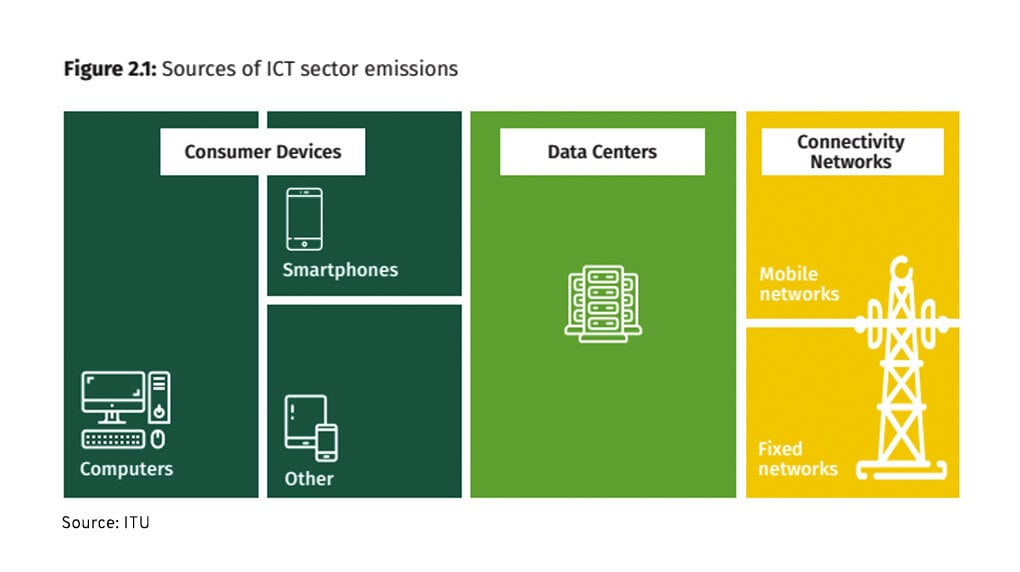
Each layer has an emissions profile that varies by power grid, hardware efficiency, and how heavy your site is. A 12MB landing page with 200 HTTP requests does more "work" per visit than a 400KB page with 20 requests, which means more energy and more CO2 per visitor. As traffic scales, the gap compounds.
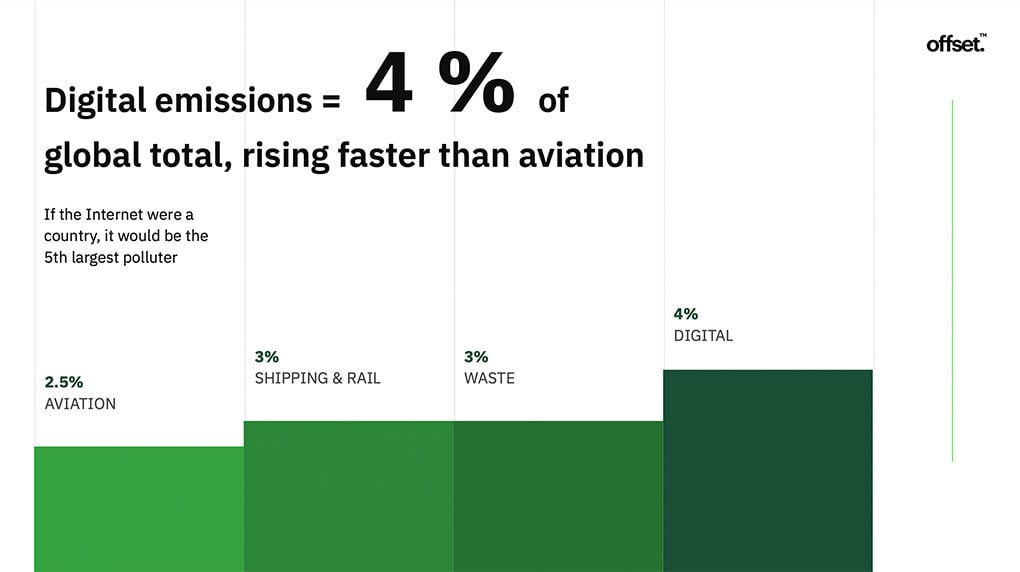
The ICT sector's share of global emissions sits somewhere between 1.5% and 4% by most estimates, with the ITU's 2024 report estimating at least 1.7%. Data centres alone used about 1.5% of global electricity in 2024 and demand has been growing by roughly 12% per year, according to the International Energy Agency. Whatever the precise figure, the trendline is up and to the right, which is why "digital pollution" is now a category in serious corporate sustainability conversations.
You don't need a consultant to get a baseline number. A handful of free tools will give you a reasonable estimate in under a minute. We recommend Offset's Website Carbon Calculator. Paste your URL and view your estimated carbon impact in seconds.
The single most useful insight in digital sustainability is that the carbon work and the performance work are the same work. Lighter pages load faster, rank better, and convert higher. They also emit less CO2 per visit. There's no tradeoff to manage.
When we run a performance pass on a client site at Major Tom, we're touching the exact levers a digital sustainability audit would surface. The framing is different; the actions are identical.
We call this digital housekeeping, and it’s the part you can control.
Images routinely account for 50–70% of page weight on the sites we audit. The fixes are well understood and routinely skipped:
On a recent eCommerce engagement we cut homepage page weight by 60% almost entirely through image work. Carbon score moved with it, and so did Lighthouse performance.
A content delivery network serves your assets from a node geographically close to the user, which means less data travelling across long-haul infrastructure and less time spent rendering. Pair the CDN with aggressive caching headers so returning visitors don't re-download what hasn't changed. Cloudflare, Fastly, and BunnyCDN all publish renewable-energy credentials worth checking against The Green Web Foundation registry.
Loading three weights of two custom fonts from Google Fonts is a request and bandwidth tax on every page view. Subset to the characters you actually use, self-host where it fits your privacy posture, and preload only the weight needed for the initial render. The carbon-and-performance dividend is consistent across the client sites we ship.
Marketing tags accumulate. Old pixels, duplicate analytics libraries, retired chat widgets, abandoned A/B test scripts. When we run a third-party audit, we routinely find five-to-ten scripts that should have been removed years ago. Each one costs energy, slows the page, and leaks data. Inventory what you actually use; cut the rest.
Ship the JavaScript needed for the first paint inline or inline-critical; defer the rest. Smaller initial bundles mean faster Time to Interactive, lower energy use on the device, and a measurable lift in Core Web Vitals.
The goal isn't a smaller website. Growing brands add pages, products, and traffic, and they should. The goal is less waste per visit, so the site stays fast and lower-emissions as it grows instead of getting heavier by default. Performance budgets per template are how you hold that line as you scale.
For more on the broader operating model that turns these from one-off fixes into a maintained standard, our guide to website maintenance and optimization walks through the cadence we use.

Performance, accessibility, and sustainability share a common discipline: design and build deliberately, then remove what isn't earning its keep. A cleaner DOM is easier for screen readers to parse, lighter for browsers to render, and cheaper in carbon per visit. The principles overlap more than they conflict. Our guide to accessible web development covers the WCAG 2.2 AA side of the same coin.
Where your servers run matters because the electricity grid powering them varies by region and provider. A data centre in Iceland fed by geothermal power is structurally lower-carbon than one in a coal-heavy grid. Most major cloud providers (AWS, Azure, Google Cloud) now publish region-level carbon intensity and offer renewable-matched regions.
The Green Web Foundation maintains a public registry of hosts that source verified renewable energy. Run your domain through their checker. If your host isn't on the list, contact their support team and ask what their roadmap looks like. The conversation alone moves the market.
Even the leanest site still emits something. Offsetting closes the residual gap by funding climate projects (reforestation, methane capture, direct air capture) that remove or avoid CO2 elsewhere. The risk is that not all offsets are created equal, and the voluntary carbon market has taken real, justified scrutiny.
If you offset, look for credits from standards with public registries, independent verification, and clear methodology, such as Verra's Verified Carbon Standard or Gold Standard. The key markers of credible offsets are additionality (the project wouldn't have happened without the funding), permanence (the carbon stays sequestered), robust quantification, and no double counting. Buying retired credits from a verified registry is the floor, not a stretch goal.
Once you've cleared that bar, a trustmark is how you make it legible to the people who will never open a registry. A credible offset badge works like the padlock in a browser's address bar: most visitors can't explain SSL encryption, but the padlock tells them at a glance that a site takes security seriously, and a verified carbon badge does the same for digital impact. A badge is only ever worth as much as the standard behind it, though, which is why the criteria above matter more than the logo.
Reduce first, offset what remains. That order matters because offsetting an inflated footprint without reducing it first is the textbook definition of greenwashing.

One-off audits give you a snapshot. Standards give you durability. The brands that hold their carbon score down over time treat performance budgets as a release gate, not a wishlist.
A workable baseline:
This is the same discipline behind any industry-leading website: clear standards, measurable budgets, and a maintenance cadence that keeps both the experience and the underlying tech honest.

Sustainability work has the easiest internal sell of any climate initiative because it cashes commercial cheques along the way.
The Major Tom clients we work with on long-term retainers see performance gains, lower hosting spend, and a credible sustainability talking point as side effects of the same monthly maintenance cycle.
Digital sustainability rewards the boring stuff: image optimization, request reduction, sensible caching, honest hosting. The metric you can put on a sustainability report is real, the work that produces it is repeatable, and the same work moves your SEO, speed, and conversion numbers in the right direction.
If you want help measuring your site's carbon footprint and building the reduction roadmap, our team can design and develop a site that's lighter at launch and stays that way after handover.
Find clarity in the chaos: talk to Major Tom about your website's carbon footprint.
A website's carbon footprint is the total CO2 emissions generated by serving and rendering its pages across data centres, networks, and user devices. The Website Carbon Calculator from Wholegrain Digital estimates the average web page emits roughly 0.36g of CO2 per view, which works out to about 43kg of CO2e per year for a site with 10,000 monthly views. Heavier sites with more traffic produce significantly more.
Use a free carbon calculator. Offset.org gives a single-page estimate in seconds. Ecograder scores your site against design efficiency, green hosting, and performance. Beacon gives per-page breakdowns over time. Run your domain through The Green Web Foundation checker to confirm whether your host uses renewable energy. Combine all four for a baseline you can track quarterly.
Sustainable web design is the practice of designing, building, and maintaining websites in ways that minimize energy use and CO2 emissions across the full delivery chain. In practice it means lighter pages, leaner code, fewer third-party scripts, efficient hosting on renewable energy, and ongoing performance budgets. The disciplines overlap heavily with web performance and accessibility, so the same work compounds across goals.
The highest-impact levers are image optimization (WebP or AVIF, responsive sizes, aggressive compression), CDN and caching configuration, font subsetting, third-party script reduction, and deferring non-critical JavaScript. Together these typically cut page weight 40–70% on sites that haven't had a performance pass. Image work alone usually delivers the biggest single drop in CO2 per visit.
Green web hosting means hosting infrastructure powered by verified renewable energy (solar, wind, hydro, geothermal) or backed by high-quality renewable energy certificates. The Green Web Foundation maintains a public registry of hosts that meet their criteria. Most major cloud providers now offer region-level carbon intensity reporting and renewable-matched regions. Switching hosts is the single highest-impact action a site owner can take if their current host is on fossil-heavy infrastructure.
Offset what remains after you've reduced what you can, never as a substitute for reduction. Use credits from registries with independent verification, public records, and clear methodology, such as Verra's Verified Carbon Standard or Gold Standard. Look for additionality, permanence, robust quantification, and no double counting. For ease, we recommend Offset.org as a credible service. Offsetting an unreduced footprint is the textbook definition of greenwashing and will not survive scrutiny in modern ESG reporting.
Be both a dreamer and a doer.