Last updated: May 2026
DOOH stopped being a brand-only channel several years ago. But most media plans still treat it like one. DOOH advertising — the digital screens in public spaces from transit hubs and retail environments to elevators and EV charging stations — is now measurable, programmatically-bought, and addressable in ways traditional out-of-home never was. The trends reshaping it right now: programmatic buying through DSPs, AI-powered dynamic creative that responds to weather, time, and audience signals, and measurement frameworks that connect DOOH exposure to downstream digital and in-store conversions. This post covers all three, with examples of what strong DOOH actually looks like in practice.
The DOOH advertising trends moving budgets in 2026:
Digital out-of-home (DOOH) advertising covers digital media in places accessible to the public. DOOH has evolved well past the video billboards of a decade ago. Today you'll find DOOH screens at bus stops, on the roofs of taxis, in retail environments, on EV charging stations, in elevators, at airports and stadiums — and inside retail media networks at point-of-sale. The accessibility, the audience addressability, and the measurability are why DOOH is so powerful in 2026.
The global out-of-home ad market reached approximately $49.8 billion in 2025, per the World Out of Home Organization. US DOOH ad spend specifically hit $4.40 billion in 2025, with a 5.95% CAGR projected to push it to $5.87 billion by 2030. Programmatic DOOH is the fastest-growing segment of that growth — up 22.6% year-over-year in 2025 and reaching $1.22 billion in 2026 per eMarketer data cited by StackAdapt.
Here, we'll cover what DOOH advertising is, why it's popular, why it's still growing as an advertising channel, how to leverage it, and a few notable examples to take inspiration from — including a Major Tom campaign we're proud of.
DOOH advertising is any digital advertising the public can interact with — a broad category that includes digital billboards, transit screens, retail media network displays, and outdoor signage. Static billboards and signage make up traditional out-of-home advertising. Technological evolution has made digital OOH far more useful than traditional OOH: it's more interactive and engaging, you can measure campaign impact, and you can launch much faster.
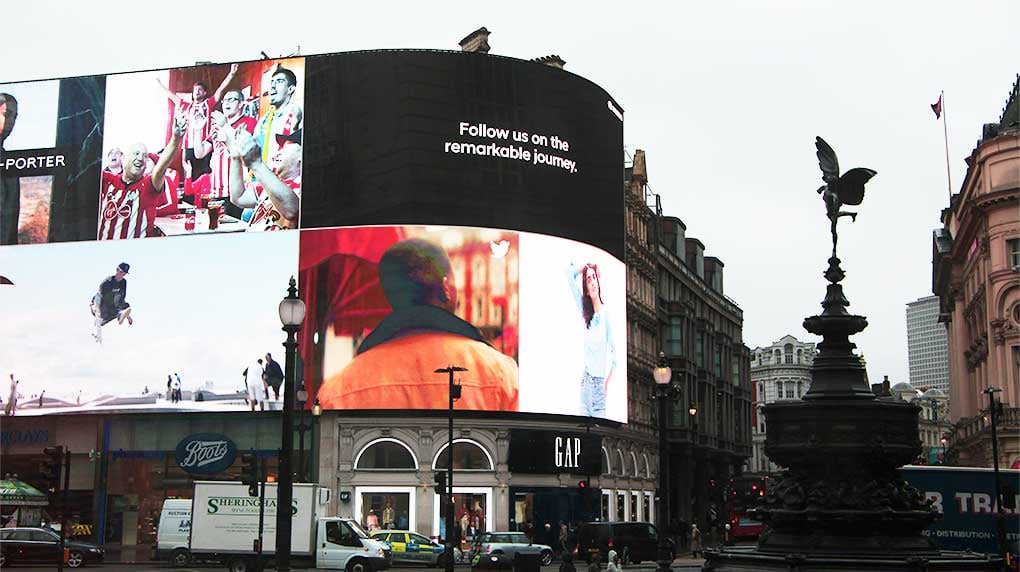
Speed-to-launch, data collection capabilities, and audience reach have driven DOOH's steady growth as an advertising channel. Consumer reception is also strong: research summarized by StackAdapt citing the OAAA and Harris Poll found that 73% of consumers view DOOH ads favourably (compared to 50% for TV, 48% for social, and 37% for online) — and 76% took action after seeing a DOOH ad.
There's programmatic advertising, and then there's programmatic DOOH advertising. A few reasons why programmatic DOOH belongs in most modern media plans:
DOOH lets advertisers display dynamic and interactive content on digital screens. That content captures viewer attention more effectively than static ads — we're hardwired to be drawn to bright, moving imagery in our environment. The immersive experience drives higher engagement than a static print or paper placement could match.
One of the biggest draws of DOOH compared to traditional OOH is the ability to measure and analyze campaign performance. You can track impressions, engagement, and key downstream metrics in something close to real time. Once you know what's working, you can make informed decisions about reallocation rather than waiting until the end of a flight. Better data feeds better ROI — and the connection to your media buying budget becomes a genuine optimization loop rather than an annual reckoning.
For more on how to use the resulting data effectively, see six tips for stellar ROI on your paid advertising campaigns. And to see it in action, check out our multi-award-winning Rieker campaign that saw a 73% year-over-year increase in retail distributor sales (made more impressive by a -13% pre-campaign decline) through Major Tom's strategic use of data, DOOH, and creative design.
One of the biggest drawbacks of traditional OOH is that once it's published, it's not changing. With programmatic DOOH, you can make real-time adjustments based on the performance data, fix issues that slipped through, or pull creative entirely when market conditions shift. Brand safety and contextual relevance benefit accordingly. A beer ad next to an embassy when a war has just broken out is the kind of error programmatic DOOH lets you catch and correct in minutes rather than weeks.
Programmatic DOOH enables granular audience targeting — much like programmatic digital advertising. Demographics, location, time, weather, and behavioural signals all feed into delivery, so the right message reaches the right people at the right place. Imagine a billboard on a busy highway during lunchtime rush hour, displaying a juicy burger ad and the message: "Rush hour lasts 20 minutes on average — burger delivery takes 25 minutes on average. Order now and have lunch waiting on your doorstep." That's programmatic DOOH in action — contextual, addressable, and timed to the moment when the message matters most.
The automation and programmatic nature of DOOH makes managing multiple campaigns across screens and locations straightforward — particularly when paired with a DSP that supports DOOH inventory alongside display and video. The same workflow that runs the rest of your digital paid program can now run DOOH too. What makes programmatic DOOH genuinely different from traditional OOH isn't just the digital screens — it's the ability to activate audience data and respond to real-world triggers in ways that make the medium far more measurable than it used to be.
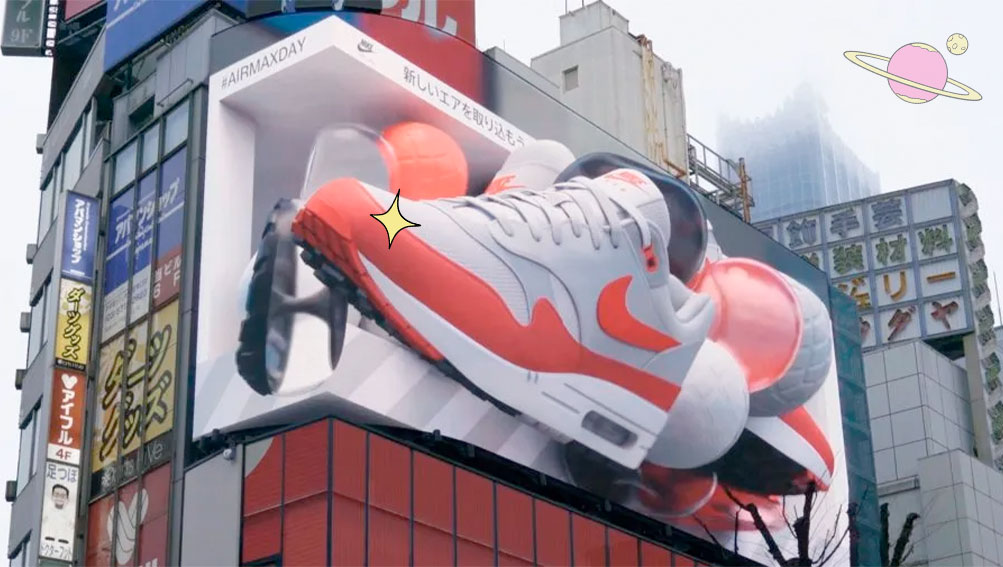
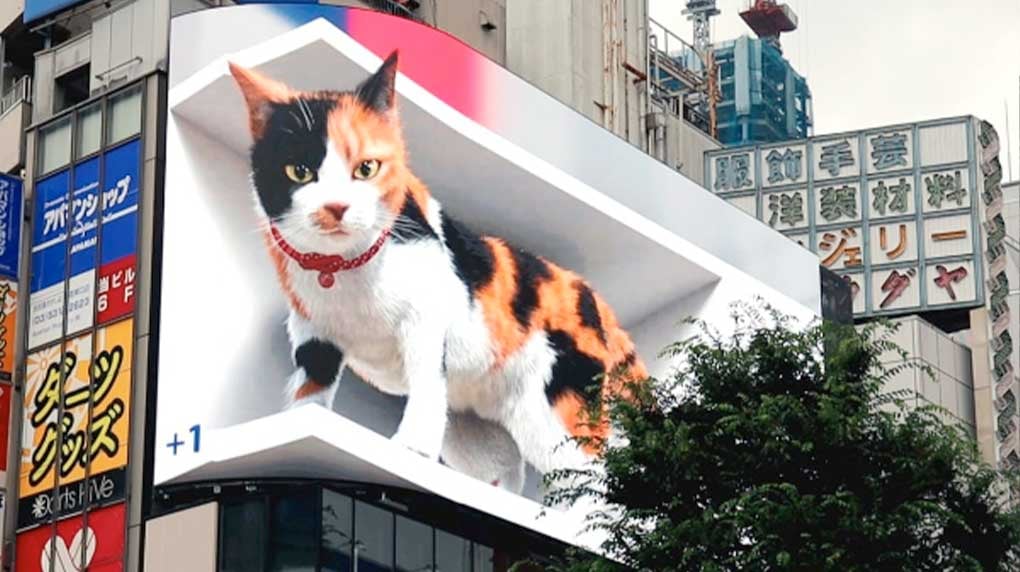
Digital screens enable creative that goes well beyond static images. Video, animation, motion graphics, 3D anamorphic illusions, and AI-generated visuals all run natively. Tell your creative team to push the boundaries — DOOH rewards ambition more than restraint.
DOOH integrates cleanly with the rest of your paid media stack. In a 2026 omnichannel plan, the strongest campaigns treat DOOH as a piece of the wider system — not a standalone branding tactic. When users see a DOOH placement, many will pick up their phone and search or check social within minutes. Make sure every touchpoint downstream reinforces the message and offers an obvious next action. Our paid media services are built around exactly that kind of integrated execution.
The trends below were "emerging" in 2024. By 2026 they're the working assumption inside any well-built DOOH plan. Make the best use of your DOOH budget by knowing where the medium is — and where it's going.
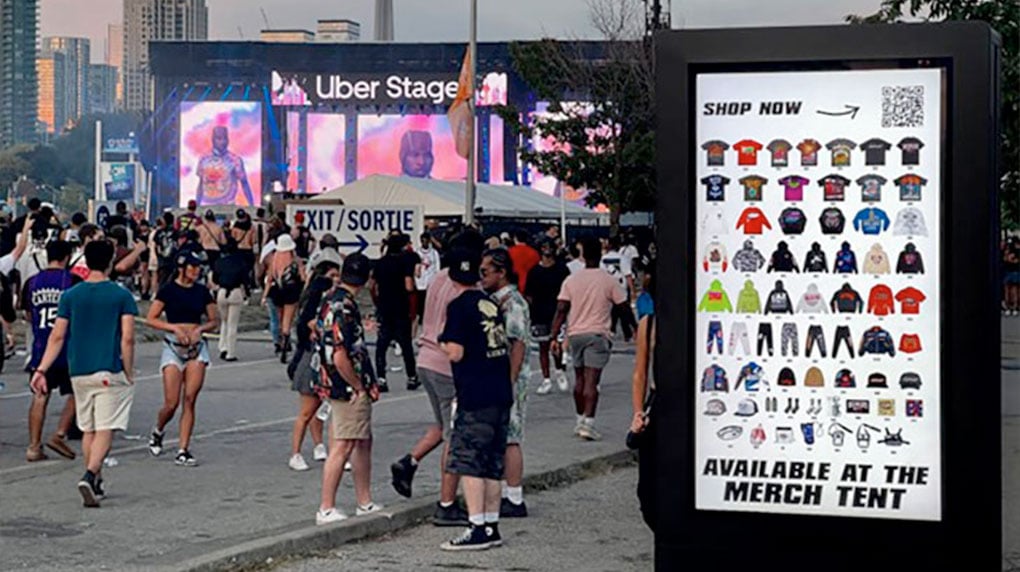
Linking DOOH campaigns with mobile devices and social platforms creates a complete advertising ecosystem. QR codes, NFC tags, and mobile app deep-links let users move from a DOOH placement to a digital action without friction. Pair these with social hashtags and content — real-time event updates, sale notifications, user-generated content — and you've built a funnel that touches every stage of the customer journey. Displaying live social feeds or curated user-generated content on DOOH screens also creates community and engagement in ways that benefit both the placement and the brand. Incorporating DOOH into a broader media planning strategy is the most reliable way to capture this effect.
DOOH's unique opportunity vs. other digital channels is its physical location. Advertising in public spaces can comment on its surroundings — using weather, traffic, time of day, or even crowd density to inspire campaigns and connect with the audience. Imagine a bus stop asking if you need an umbrella during a downpour and pointing you to a store that sells them. Or a billboard advertising WFH career opportunities to commuters stuck in traffic during their morning drive.
You can use the medium to inspire the message. Trigger-based campaigns automatically adjust ad content based on predefined conditions — time of day, audience density, weather, traffic patterns, or local events. This worked incredibly well in our Rieker campaign which focused on weather-triggered ads.
The 2024 version of this was a novelty. The 2026 version is table stakes for any premium DOOH placement.
AI in DOOH isn't slowing down. Machine learning algorithms continue to improve real-time data analysis on audience demographics, behaviour, and foot traffic — feeding optimization decisions automatically. Dynamic content optimization runs natively now, with generative AI adjusting content based on audience signals in real time. A DOOH screen detects a large number of young adults passing during peak hour and shifts creative to match. That kind of responsiveness was a 2024 demonstration; in 2026 it's how the leading DOOH inventory operates by default.
DOOH measurement standards have improved significantly. OAAA standardization, programmatic measurement via DSP-side reporting, mobile location data attribution, and exposure-to-conversion modelling all give DOOH a measurement story that didn't exist five years ago. The implication: DOOH no longer needs to be defended as "brand-only spend." It can sit alongside performance channels in a unified measurement framework, with credible attribution for downstream activity. For the metrics that close that loop, our PPC metrics guide covers the underlying framework that applies across paid media.
Wondering what DOOH advertising looks like in practice? Here are three examples — including one we ran ourselves.
Pepsi Max turned a London bus shelter into a live-action sci-fi scene using AR and video effects. The results surprised and delighted commuters, and the brand intended to share the "Live For Now" message. Pepsi then used the footage from the installation to create video assets for their social feed.
The campaign produced a media frenzy — 95% of impressions and coverage came as earned media. The work went viral with three million YouTube views in five days, sales lifted 35% YoY, and Pepsi collected over 20 advertising awards. The Pepsi Max bus shelter installation remains one of the most-referenced DOOH campaigns in the industry.
Major Tom's name was inspired by David Bowie and, in part, by astronaut Chris Hadfield. So when Chris Hadfield came to Vancouver's Symphony Orchestra, Major Tom saw an opportunity to connect with the community over our shared love for the astronaut.
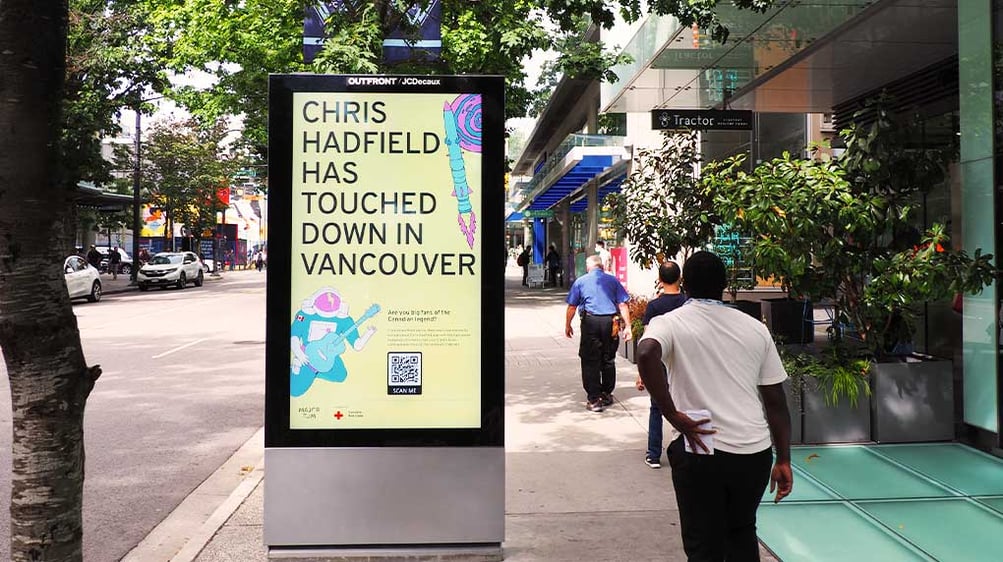
The Space Oddities campaign was an experiential DOOH execution designed to surprise, delight, and raise money for charity. It took a three-tiered approach.
We took out hyper-local programmatic ads within a 300m radius of the VSO, broadcasting the message of Chris Hadfield's Vancouver visit on external billboards at bus shelters, urban panels, and screens in casual dining locations. We leveraged dayparting to keep the messaging relevant as the event approached, and the second wave of ads invited the audience to donate to the Canadian Red Cross — a charity endorsed by Hadfield.
We wanted to give our hero something to take home. Chris Hadfield and his band were gifted limited edition t-shirts from The Tin Can: Major Tom official merch store, along with a handwritten thank-you note.
A Major Tom astronaut was on-scene at the VSO event handing out free merch and directing people to the Major Tom Agency official swag shop, the Tin Can . Proceeds from the initiative were donated to the Canadian Red Cross, alongside a contribution from Major Tom directly.
The campaign produced a 391% increase in website visitors and an average Tin Can order value of $71. More importantly, we spread a little joy — and Chris Hadfield tweeted about it.
When Apple steals your agency's name, what do you do? You put it on a billboard. In the lead-up to the iPhone 6S launch, when we were still 6S Marketing, we saw an opportunity to make a moment. We rented a billboard in Times Square and parked a mobile ad truck outside the Apple Store on Fifth Avenue. The message: "We had the name first" — alongside cheerful pleas for Apple to name their next product the iPhone 7.
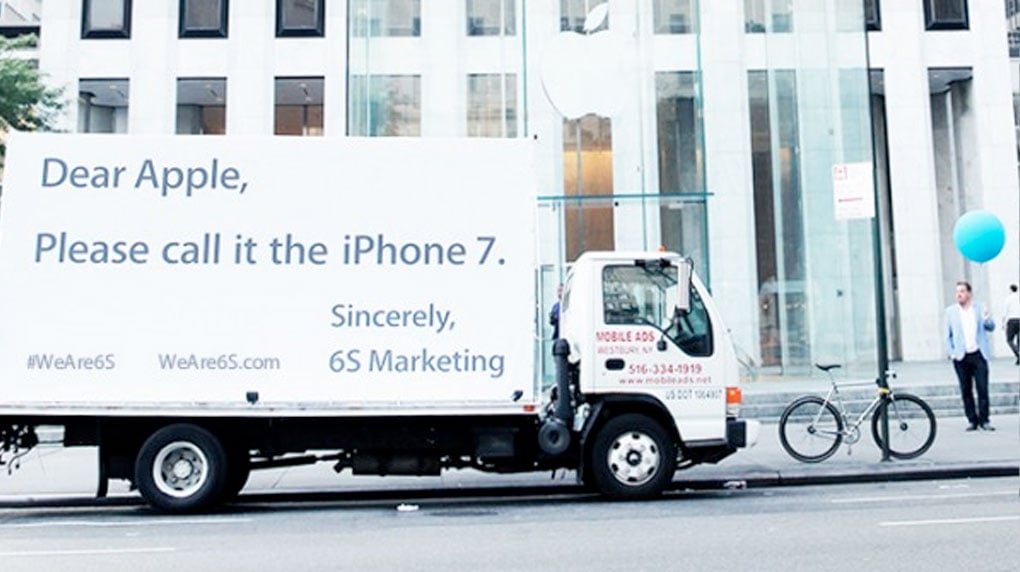
The DOOH campaign was all in good fun. 6S benefited from a positive run of press coverage and saw a sharp lift in traffic and leads as a result.
DOOH advertising has evolved into a powerful, dynamic channel with no sign of slowing. As programmatic infrastructure, AI capabilities, and measurement standards continue to mature, DOOH plays an increasingly central role in the media plans of brands competing for attention in physical spaces. It offers an innovative way to connect with your audience — and pairs particularly well with mobile, social, and CTV in an omnichannel buy.
Ready to incorporate DOOH into your strategy? Our paid media team can help you find clarity in the chaos of DOOH inventory and build a plan that earns its budget back.
DOOH (digital out-of-home) advertising refers to any digital media displayed in public spaces — digital billboards, transit shelters, taxi screens, retail media network displays, airport and stadium signage, elevator screens, and EV charging station displays. It's distinct from traditional OOH advertising (static billboards and print signage) in that it can display dynamic, interactive content, can be measured against impressions and downstream conversions, and can be bought programmatically through demand-side platforms.
DOOH advertising offers higher engagement than static OOH thanks to dynamic and motion-rich creative; real measurement of impressions, engagement, and downstream action; real-time campaign optimization through programmatic DSPs; precise audience targeting via demographics, location, time, weather, and behavioural signals; and seamless integration with mobile, social, and CTV in a unified omnichannel buy. Consumer reception is also strong — 73% of consumers view DOOH favourably, per OAAA and Harris Poll research.
Programmatic DOOH advertising is the automated buying of DOOH inventory through demand-side platforms (DSPs), the same way programmatic display and video are bought. It enables real-time bidding, audience-based targeting, dynamic creative optimization, and unified cross-channel measurement. Programmatic DOOH ad spending grew approximately 22.6% year-over-year in 2025 and is projected to reach $1.22 billion in 2026, per eMarketer data cited by StackAdapt — making it the fastest-growing segment of the OOH market.
The trends reshaping DOOH in 2026 are: programmatic buying through DSPs and private marketplaces, dynamic creative that responds to weather, time, and audience signals, cross-channel measurement linking DOOH exposure to mobile and in-store conversion, retail media network DOOH inventory at point-of-sale, and integration with social, mobile, and CTV in unified omnichannel campaigns. AI-powered creative optimization, which was emerging in 2024, is now the default behaviour on premium DOOH inventory.
DOOH is more flexible, more measurable, and faster to launch than traditional OOH. Where traditional OOH requires manual installation and is fixed once published, DOOH supports dynamic creative, real-time updates, programmatic buying, and audience-based targeting. Measurement is the biggest differentiator — DOOH can track impressions, engagement, and downstream conversions with credible attribution, where traditional OOH largely relies on traffic estimates. Both formats can play a role in a well-built media plan, but DOOH carries the share of new growth in the category.
DOOH effectiveness is measured through a combination of impression counts (verified via DSP reporting and venue audience data), engagement signals (interaction with QR codes, NFC tags, or companion mobile creative), exposure-to-conversion modelling (linking DOOH exposure to downstream digital action via mobile location data), and earned media value (PR coverage and social amplification, particularly for experiential DOOH installations). OAAA-standardized measurement and DSP-side reporting have substantially improved DOOH's measurement story over the past several years.
Three notable DOOH examples: Pepsi Max's London bus shelter AR installation, which produced three million YouTube views in five days, 35% YoY sales lift, and 95% earned media coverage; Major Tom's Space Oddities campaign in Vancouver, which produced a 391% lift in website visitors plus a public acknowledgement from astronaut Chris Hadfield; and the 6S Marketing Times Square billboard in response to the iPhone 6S launch, which generated significant press coverage and a sharp lift in traffic and leads.
The better the data you look at, the better the decisions you'll make.