The Amazon marketplace is one of the most accessible ways for a UK or European seller to reach North American consumers. With 230 million global Prime members and Amazon US alone serving over 270 million unique monthly visitors, the audience is enormous. But moving products across borders comes with complexity Amazon doesn't make obvious until you've signed up.
Here are the real pros and cons of selling overseas with Amazon in 2026, based on what's changed since we first wrote about this — and what to watch for if you're considering the leap.
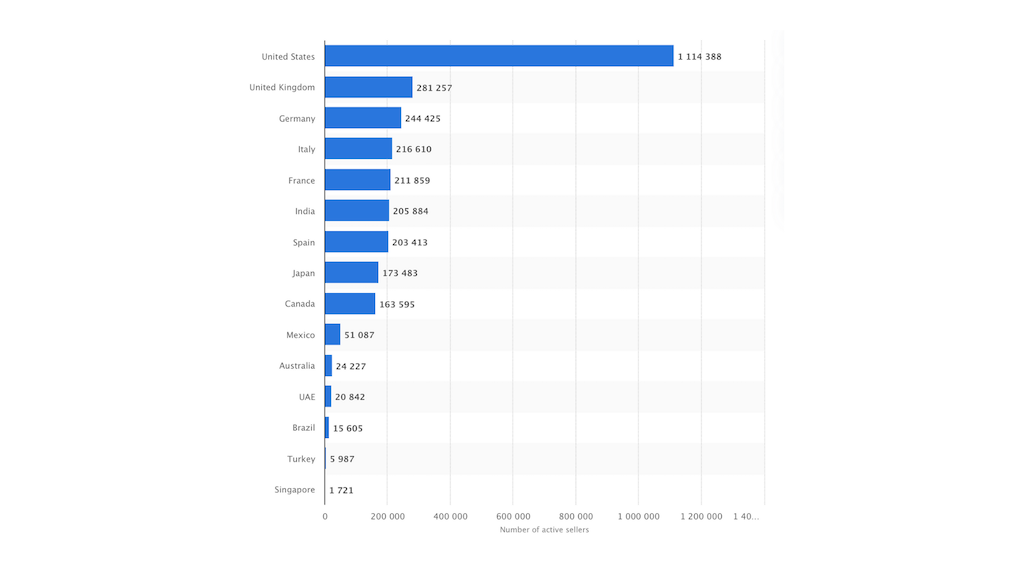
Amazon's marketplaces give UK sellers immediate access to consumers in the US, Canada, Mexico, Australia, Japan, India, the UAE, Singapore, and across Europe. The North American Unified Account in particular lets you list once and sell across the US, Canada, and Mexico for a single monthly fee.
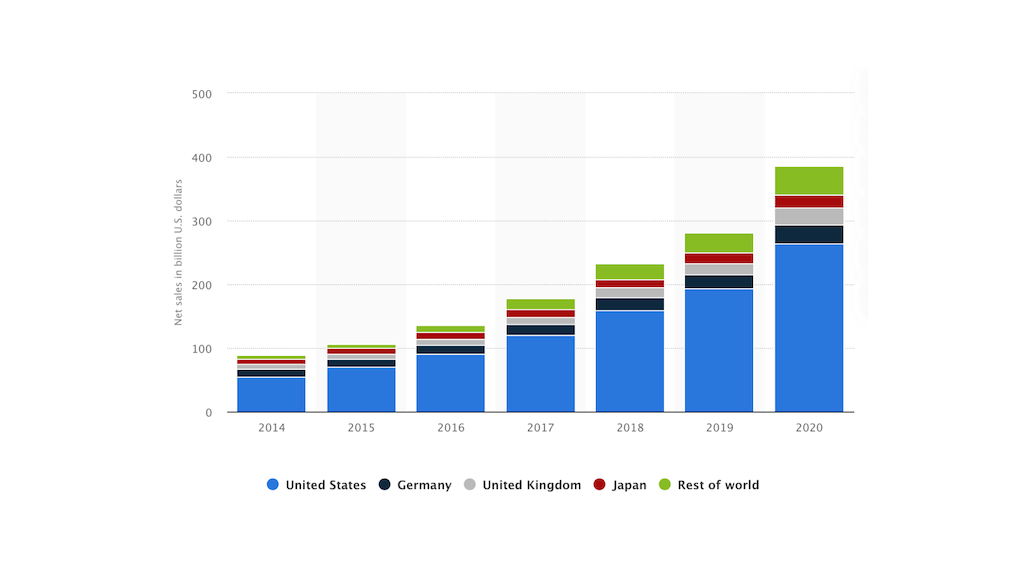
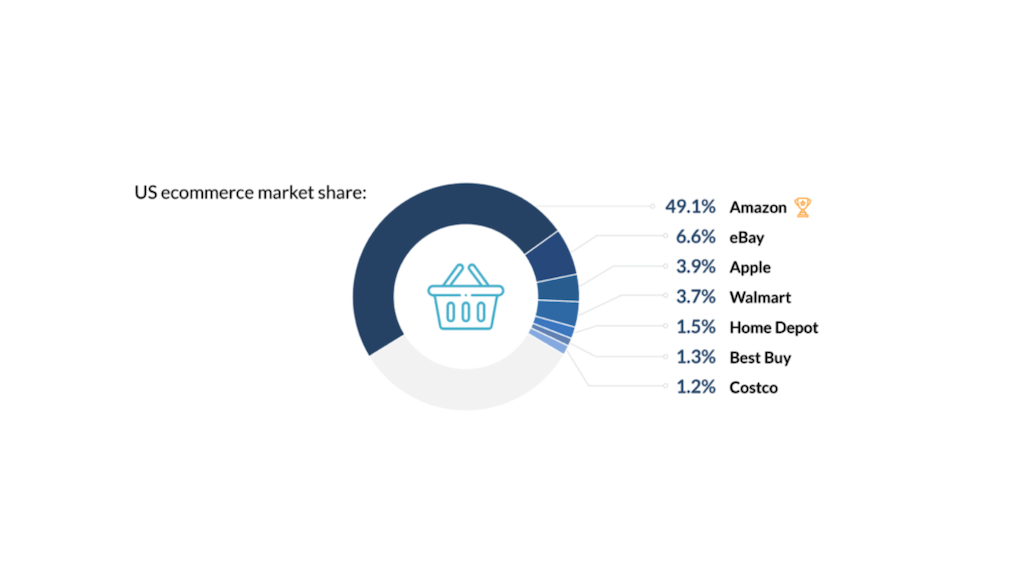
What's changed: Amazon US in 2024 generated around $387 billion in segment revenue, and the platform now holds roughly 38% of US eCommerce overall. The audience is bigger than ever, but so is the competition — there are around 9.7 million third-party sellers globally, and a meaningful share are sophisticated operators with established review histories.
Fulfillment by Amazon (FBA) lets you ship your inventory to Amazon's warehouses and let Amazon handle storage, packing, shipping, customer service, and returns. For UK sellers expanding into North America, FBA is often the difference between viable and unviable — Amazon's Prime-shopper expectations of one- and two-day delivery are impossible to meet from across the Atlantic without local fulfillment.
Amazon has continued investing in cross-border logistics tools, including Amazon Global Logistics for shipping inventory from China, the UK, and the EU directly into FBA warehouses overseas. The trade-off is fees — Amazon's 2024 storage and aged-inventory restructure made it more expensive to leave slow-moving stock in FBA warehouses, so inventory planning matters more than it used to.
Customers who discover your brand on Amazon often search for you on Google afterwards. Amazon presence in a new market often lifts direct-site traffic and branded search volume in that same country, even if you don't run any other marketing locally. For UK brands entering the US, a strong Amazon listing can be a meaningful brand-awareness asset, not just a sales channel.
Amazon's marketplaces operate in local currencies, with localized product detail pages, customer service, and payment methods. The Amazon Currency Converter for Sellers (ACCS) lets you deposit your foreign-market earnings into your home bank account with transparent (if not always cheapest) FX conversion. Many sellers use third-party multi-currency accounts like Wise to capture better rates, but the option is yours.
This is where most UK sellers underestimate the work. Selling on Amazon US requires:
The good news: Amazon's VAT Services on Amazon can handle EU VAT registration and filings for a fee, and there are specialist accountants who handle US sales tax for non-US sellers. Budget for both.
Amazon's fee structure for international sellers has grown more complex. Beyond the standard 15% referral fee, you'll see FBA fulfillment fees that vary by product weight and dimensions, monthly inventory storage fees, low-inventory-level fees (new in 2024 — Amazon now penalizes consistently low stock), aged-inventory surcharges, and removal/disposal fees when products don't sell. International returns add another layer.
The result: a margin that looked healthy in a spreadsheet can evaporate once you account for all the moving pieces. Build your pricing model with every Amazon fee category included before you list.
The Buy Box — the box on a product listing that drives the vast majority of purchases — is competitive even for branded sellers. If your product is one that other sellers can list against, expect price wars. Even private-label sellers face competing listings from category competitors, including private-label products Amazon itself sells.
For UK brands entering the US, this is often the hardest adjustment: the catalog is more crowded, the buy-box criteria are stricter, and shoppers expect faster delivery than they often expect in the UK.
Amazon's account health system is strict, and a few customer complaints — late shipments, defective product reports, intellectual property claims — can result in a suspension that takes weeks to appeal. UK sellers operating overseas without a local team are often slower to respond to performance issues, and that lag can be the difference between a warning and a suspension. Tooling like Amazon's Account Health Rating dashboard helps, but proactive monitoring is essential.
The same constraint that applies to your home market applies overseas: Amazon owns the customer relationship, not you. The customers you acquire on Amazon US are largely invisible to your own remarketing and email funnels. There are compliant ways to bridge that gap, but if your overseas plan is built on building an owned audience, Amazon alone won't get you there.
For most product brands with proven UK demand and unit economics that survive the additional fees and tax overhead, expanding to Amazon US (and Canada and Mexico via the Unified Account) is a strong move. The audience size and infrastructure are unmatched, and once you've solved the tax and logistics setup, the marginal cost of new orders is low.
It works less well when: margins are tight to begin with, the product is heavy or low-priced (making FBA fees disproportionate), the product is regulated differently in target markets, or when there's no plan for how to compete on listing quality, reviews, and ads against established US sellers.
Major Tom has supported brands launching onto Amazon US, Canada, and beyond from a UK or EU base. We help with marketplace setup, tax-registration coordination, listing creation and translation, Amazon ad strategy, and the operational discipline that keeps account health green. For Donnelly Group's men's grooming line, that meant successful launches across Amazon US and Canada. For Wild Grapes, an integrated approach drove a 98% increase in monthly Amazon sales.
If overseas Amazon expansion is on your roadmap, talk to our eCommerce strategy team. We'll help you weigh the pros and cons against your specific economics before you commit.
Yes. A UK business can register as a seller on Amazon US (and Canada, Mexico, and other Amazon marketplaces) without a physical US presence. You'll need a UK business entity, an EIN or ITIN with the IRS, a US bank account or a multi-currency account that can receive USD payouts (Wise and Payoneer are common choices), and a clear plan for fulfillment — most UK sellers use FBA so Amazon handles US storage and delivery.
Amazon's North American Unified Account is a single seller account that lets you list and sell across Amazon US, Canada, and Mexico for one monthly Professional Seller fee. Your inventory, listings, and case management consolidate into one Seller Central interface, with localized product detail pages for each marketplace. It's the simplest entry path for UK sellers wanting to operate across North America rather than just the US.
Account approval typically takes a few days to a few weeks, depending on how quickly Amazon's verification team processes your documents. Setting up FBA inventory in the US takes longer — typically two to six weeks from when you decide to expand, depending on shipping method (Amazon Global Logistics, third-party freight forwarder, or air freight). A realistic end-to-end timeline from decision to first US sale is 30 to 60 days for most UK sellers.
UK sellers need to complete Amazon's IRS tax interview (which usually results in completing form W-8BEN to claim UK-US tax treaty benefits), obtain an EIN or ITIN, and stay compliant with US state sales tax obligations. Amazon collects and remits sales tax in marketplace-facilitator states, but you may still need to register in states where you have inventory nexus. Federal income tax on US-sourced eCommerce sales is generally exempt under the UK-US tax treaty if you have no permanent establishment in the US — but always confirm with a US-tax-qualified accountant.
Amazon Global Selling is the umbrella program that lets sellers in one country list and sell in Amazon marketplaces in other countries. It includes tools for translation, currency conversion, cross-border logistics, and unified account management. For UK sellers, it's the gateway to Amazon US, Canada, Mexico, the rest of Europe, Australia, Japan, and the Middle East.
Yes, but FBA inventory is country-specific — you need to ship and store inventory in each marketplace's FBA warehouses separately. There are programs to ease this, including Amazon's North American Remote Fulfillment (which lets a single inventory pool in the US fulfill orders for Canada and Mexico, at a higher fee per unit) and Amazon's European Fulfillment Network. For most UK sellers expanding to the US, sending inventory directly to US FBA warehouses (rather than using Remote Fulfillment) gives the fastest delivery times and best Buy Box performance.
Be both a dreamer and a doer.