Last updated: May 2026
Your lead generation website is probably leaking pipeline before the homepage finishes loading. An underperforming B2B lead gen website almost always fails for one of three reasons: an unclear value proposition, friction in the user experience, or goals that aren't tied to anything measurable. Diagnosing which problem you have, and in what order to fix it, is the difference between cosmetic tweaks and a site that compounds growth. So let's walk through the audit, the goals, and the continuous improvement loop we use to turn flat sites into steady pipeline.
What it takes to turn a lead generation website around:
Your website is the ultimate salesperson, working 24/7 to attract, engage, and convert. But when it stops generating leads, it stops being a salesperson and starts being a stagnant online brochure. We've seen that frustration play out across dozens of B2B clients. The good news: the path back is usually clearer than it looks. Let's start at the top.
Understanding your site's current performance, and where it's failing, is the foundation of every meaningful improvement. Even better, a reliable diagnostic process keeps paying dividends as the site evolves.
Start with a comprehensive audit of the metrics that matter for lead generation: page load speed, user engagement, conversion rate by template, form completion rate, and bounce rate on key landing pages. Free tools like Google Analytics 4, Microsoft Clarity, and Hotjar do the job without upfront cost. The qualitative and quantitative data they surface together is what tells you where users are actually getting stuck.
The larger and more complex the site, the more important this step is, especially if you need buy-in from multiple stakeholders. Audit data is what turns a redesign argument into a business case. When we audit B2B sites, we usually find three or four invisible problems sitting on top of the obvious one.

From outdated pages to inaccessible design, a handful of usual suspects keep showing up in our audits. Alone, any one of them probably isn't a deal-breaker. Stacked together, they cumulatively crush conversion.
If your website is the road to conversion, UX is the state of the blacktop. Each unoptimized element is another pothole users have to swerve around. Two priorities tend to fix the most ground:
Patience is in short supply online, and on mobile it's shorter still. Mobile devices account for 53.65% of global web traffic versus 46.35% on desktop (StatCounter, April 2026), so a sluggish mobile experience kills lead capture for the majority of your audience.
Google's Core Web Vitals are the single most useful set of benchmarks here. Interaction to Next Paint (INP) replaced First Input Delay as a Core Web Vitals metric on March 12, 2024 (Google Search Central); the "good" threshold is INP under 200 ms. If your CTAs, accordions, and form fields feel laggy on a mid-range Android, you're already failing this metric whether you know it or not. Pair regular CWV monitoring with image, script, and CMS hygiene so improvements compound rather than regress.
This is the moment that decides whether a visitor becomes a lead. If they're ready to convert but can't find a form, or aren't sure where a button will take them, the journey collapses. Two checks tend to fix the bulk of CTA underperformance:
Accessibility is often filed under compliance, but it's a direct lever on conversion too. WebAIM's 2026 analysis of the top 1 million home pages found 95.9% had detectable WCAG 2 failures, averaging 56.1 accessibility errors per page (WebAIM Million 2026). Low-contrast text, missing alt text, and unlabeled form fields all sit on the most common offenders list, and every one of them quietly excludes users who would otherwise convert. Fixing them widens the addressable audience and lifts the experience for everyone, not just users relying on assistive tech.
Even when UX, speed, and CTAs are in order, a few process habits can still cap performance:
Once the audit has surfaced root causes, the next move is to set SMART goals so you know where to focus. Vague goals produce vague sites. We see this on every project: the teams who land the biggest lead lift are the ones who pinned a specific number to a specific KPI before any wireframe got drawn.
Goals worth chasing on a lead generation site usually pair business outcomes with experience inputs:
Knowing your audience well enough to write goals that matter starts with research. Be ready to test your assumptions, drop the ones that don't hold up, and dig into the real needs, preferences, and pain points of the people you want to convert. Pull data from several sources together:
Empathy mapping is one useful tactic for turning that raw data into insight. Plot what users say, do, think, and feel, then look for the contradictions. If surveyed visitors say they come for educational content but heat maps show them bouncing off the blog index, you've found a real navigation problem to solve. Refresh persona profiles periodically; your audience keeps evolving, and the site should evolve with it.
For a deeper look at how this plays out across a sprawling B2B site, see our companion piece on complex website usability issues at large-scale organizations.
With personas built and goals set, the next job is translating research into changes that move the numbers. A few elements pay back the most attention.

The strongest websites feel intuitive, not maze-like. With your research in hand, map the journey for each priority audience, design clean navigation, and keep the information hierarchy consistent page to page. Mobile-responsive design is the floor, not the ceiling.
The more distinct audiences you serve, the more important this gets. Take our work with Layfield Group: two separate lines of business needed a clear brand and information architecture so each visitor could find what they came for. The rebuild paid off in cleaner conversion paths and a meaningfully higher lead capture rate across both audiences. Usability tools like card sorting and tree testing are useful here, especially on larger catalogues where IA decisions ripple across hundreds of pages. The impact? A 10X increase in leads.
No matter how complex the site, the goal is invisible UX. If the journey feels curated, users move through it. If it doesn't, every CTA feels intrusive.
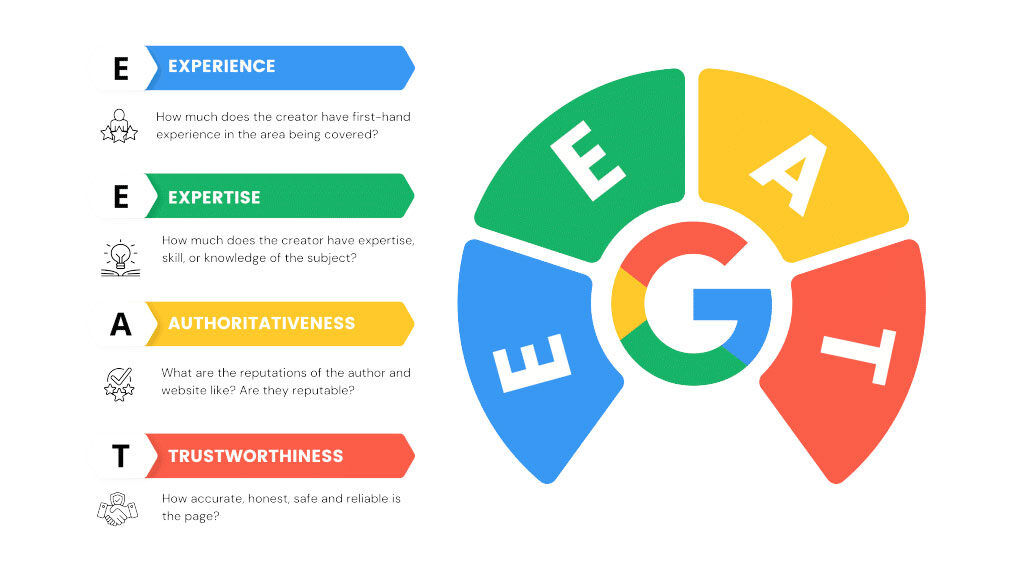
Search visibility still drives most B2B lead generation, but the surface has split. Traditional SEO continues to compound when you do it well, and now AI answer engines (Google's AI Overviews, ChatGPT, Perplexity, Claude, Grok) surface answers directly to users before they ever click. To show up in either, content needs clear definitional answers near the top, structured data, named authors, and the kind of E-E-A-T signals that make a source worth quoting. Pages stuffed with keywords but light on substance still lose; the bar for clarity and original insight is just higher than it was.
High-quality, tailored content is the lifeblood of any lead generation website. Focus on the pain points your research surfaced, organize content into topic clusters, and write for readers first. Personalization layers (dynamic content blocks, behavior-based offers, segment-driven hero modules) lift relevance for return visitors when they're done with restraint. The fastest way to undo this work is to chase the algorithm at the cost of usefulness, and AI overviews are getting better at spotting the difference.
Analytics is how you replace assumption with evidence. GA4, Microsoft Clarity, and Hotjar between them tell you what users are actually doing across each conversion path. From there, structured A/B testing on layouts, CTAs, and form patterns shows which changes actually move qualified lead volume. Run experiments long enough to generate statistically meaningful data; a few days rarely tells the truth.
CTAs deserve repeated attention. Each one should be clear, action-oriented, aligned with the surrounding content, and placed where users actually look. Whether it's a newsletter signup, a demo request, or a contact form, give visitors a compelling reason to take the next step and an obvious place to do it.
When you rebuild, build for the business you'll have in three years, not just the one you have today. A flexible CMS, clean integrations with your CRM and marketing stack, and a backend your team can actually use are what prevent the next costly overhaul. Explore where AI and automation can quietly improve experience too: smart on-site search, generative product or content recommendations, and triage chat that escalates only the conversations that need a human are all showing up in 2026 builds.
The same pattern shows up across the clients we work with: clear goals plus continuous optimization beats any one-off rebuild. For IPEX, well-crafted user journeys drove a 611% lift in lead form submissions by surfacing friction the original site had buried. For Orkin, the same disciplined experimentation contributed to a 54% increase in company revenue. Different industries, same lesson: compounding gains come from treating the website as a living programme, not a finished project.
Lead generation websites are living systems. They need ongoing care, not a one-and-done overhaul. As your site gathers more behavioral data, that data should drive the next iteration of content, design, and functionality. Lean into analytics, A/B testing, and ongoing user research, and the cumulative gain is bigger than any single launch.
If you're trying to find clarity in the chaos of where to start (audit, redesign, replatform, or stay the course) we can help you make the call. Ready to take your lead generation website from underperforming to ever-improving? Explore our web design and development services or reach out to start the conversation.
An underperforming lead generation website usually fails for one of three reasons: an unclear value proposition that visitors can't quickly act on, friction in the user experience (slow load, confusing navigation, weak CTAs), or goals that aren't tied to measurable business outcomes. Start with a diagnostic audit covering Core Web Vitals, conversion rate by template, form completion, and bounce rate on key pages. Fix the highest-friction issue first, then iterate.
Begin with audit data, not opinions. Tighten navigation and information architecture so the right audiences reach the right pages, fix Core Web Vitals issues (especially INP on mobile), make CTAs obvious and consistent with the page content, and tie SMART goals to revenue-relevant KPIs. Layer in ongoing SEO and AEO work, structured A/B testing on conversion templates, and quarterly persona refreshes so the site evolves alongside your buyers.
Track KPIs tied directly to pipeline: qualified form fills or demo bookings, conversion rate by template and traffic source, time-to-conversion across the primary journey, and cost per acquisition for paid channels. Layer in experience metrics like Core Web Vitals (INP under 200 ms is the "good" threshold), mobile usability, accessibility compliance, and bounce rate on revenue-relevant pages. Avoid vanity metrics that don't connect to business outcomes.
You can usually see lift on focused changes (CTA, form, or hero module experiments) within four to eight weeks once data is flowing. Structural improvements (information architecture, template rebuilds, CWV remediation) typically show meaningful gains over one to two quarters. Compounding growth comes from a continuous optimization programme, not a single launch. Treat the site as a living programme and the trend line steepens over twelve to eighteen months.
User research is what stops you guessing. Surveys, interviews, sales workshops, desk research, and analytics behavior together tell you who your buyers actually are, what they need, and where current journeys break. That insight drives information architecture, content priorities, CTA placement, and personalization rules. Without it, you're redesigning around internal assumptions; with it, every change is grounded in something measurable about the people you want to convert.
Yes, directly. Accessibility failures (low-contrast text, missing form labels, broken keyboard navigation) quietly exclude users who would otherwise convert. WebAIM's 2026 analysis found 95.9% of top home pages had detectable WCAG 2 failures, averaging 56.1 errors per page. Clearing that bar widens your addressable audience, improves SEO, and lifts the experience for everyone. Treat WCAG 2.1 AA as the floor, not a stretch goal, and you'll see flow-through to conversion.
Optimize when the underlying architecture, CMS, and technical foundation are sound and the gaps are in content, CRO, or accessibility. Rebuild when the platform can't scale, the IA traps users, or the design system makes ongoing optimization unreasonably slow. A diagnostic audit answers this question quickly. Most of the sites we audit have at least eighteen months of optimization runway before a rebuild is the right call; some need it tomorrow.
Design with community in mind, innovate with technology at heart, and drive business success by finding the sweet spot where they all converge.