Last updated: May 2026
Programmatic now accounts for roughly 92% of US digital display ad spending, per EMARKETER. The question for most brands isn't whether to use it — it's where in the stack it earns the most. Programmatic advertising is the automated, real-time buying and selling of digital ad inventory using software rather than manual negotiation, spanning display, video, native, audio, connected TV, and digital out-of-home. For B2C brands and for B2B programmatic advertising in particular, it offers scale, precision targeting, and measurable ROI that direct-buy arrangements rarely match. here we explain what programmatic is, the main types, the benefits, recent innovations, and how to launch your first campaign.
The roles programmatic plays across a modern paid media plan:
Programmatic advertising has become the backbone of most paid media strategies. According to EMARKETER's January 2026 programmatic FAQ, US programmatic digital display ad spending is projected to exceed $180 billion in 2025 — representing approximately 92% of total digital display ad spend. Programmatic isn't a tactic anymore; it's how most digital display is bought.
But what is programmatic advertising, and how does it fit into the broader digital landscape? This post provides an overview of programmatic ads, the main types, recent innovations including AI-driven optimization, and what it looks like to launch your first campaign.
Programmatic advertising is a form of automated buying and selling of digital ad inventory that uses real-time bidding (RTB) technology to determine which ad is served on each impression. Advertisers use software to bid on specific target audiences based on criteria like age, location, behaviour, and intent — maximizing the efficiency of campaigns at scale. Ad networks connect with ad exchanges and supply-side platforms (SSPs) to find available inventory that matches each advertiser's targeting parameters.
The question we hear most from clients new to programmatic is which type to start with. Our usual answer is private marketplace deals if you're in a competitive vertical where brand safety and premium inventory matter, and open auction for reach-first awareness campaigns. The two approaches solve different problems and most strong programs use both.
No. Google offers a programmatic solution called the Google Display Network (GDN), but it's distinct from other programmatic platforms. The GDN is an ad exchange integrated with the Google platform, letting advertisers buy display ads through automated auctions — similar to other programmatic ad exchanges but tied to Google's ecosystem.
There are many other ad exchanges and networks in the programmatic space, including Xandr (now part of Microsoft Advertising), OpenX, and Magnite (formerly Rubicon). Diversifying across multiple DSPs and exchanges gives advertisers wider inventory access, better benchmarking, and lower switching risk than a single-platform strategy.
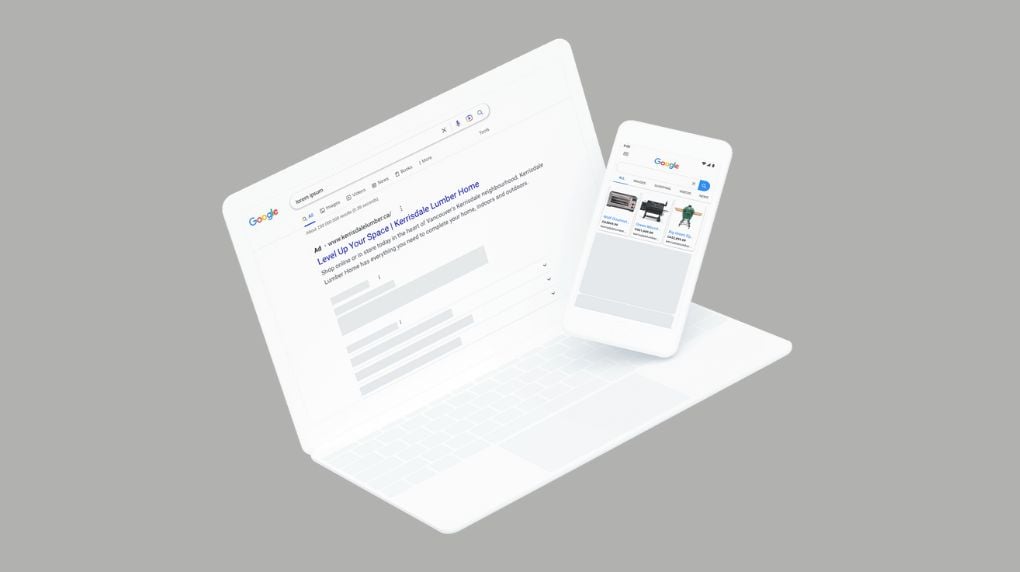
Every advertiser wants to get the most from their budget. Programmatic display ads offer benefits that help ensure campaigns are as efficient as possible — and the benefits compound for B2B programmatic advertising in particular, where audience precision and account-level targeting capabilities are essential:
There are several types of programmatic advertising, each with its own strengths. The main four:
The shift toward PMP and programmatic direct has been one of the strongest trends in programmatic over the past several years. According to the EMARKETER FAQ, more than 91% of US programmatic display spend now flows through PMPs and programmatic direct combined — driven by advertiser demand for inventory quality, brand safety, and measurement transparency over bid-price savings.
If you're in the B2B space, B2B programmatic advertising has its own best practices worth reviewing — particularly around account-based targeting, intent data integration, and longer sales-cycle attribution.
Beyond standard display and video formats, several programmatic capabilities have evolved into mainstream tools. The innovations worth knowing in 2026:
DCO dynamically personalizes ad creative based on user data and behaviour, delivering more relevant and engaging ads at scale. Advertisers use DCO to customize images, text, and calls to action based on location, weather, time, and user signals. AI-powered DCO is now standard inside major DSPs and consistently outperforms static creative when the underlying data and creative variants are well-structured.
Native ads blend seamlessly with the surrounding content on a website or app, offering a more subtle and engaging experience. Native ads can be delivered programmatically — letting advertisers target specific audiences and optimize based on performance data. Native typically outperforms standard display on engagement and brand-lift metrics for awareness campaigns.
.jpg?width=1020&height=572&name=dynamic%20creative%20optimization%20(DCO).jpg)
Programmatic audio lets advertisers buy targeted ad inventory from audio publishers via a single DSP. Audio ads don't rely on visual engagement and can reach consumers during commutes, workouts, and other situations where visual ads can't. Host-read podcast ads in particular have been shown to drive strong brand recall, and the segment has continued to grow as podcast advertising matures.
AI and machine learning are now baked into every major DSP. Predictive bidding identifies high-potential users, AI-driven creative generation produces variants at scale, anomaly detection flags fraud and made-for-advertising (MFA) inventory, and AI-improved attribution credits each touchpoint in the customer journey more accurately. AI is no longer an emerging feature in programmatic — it's the operating layer underneath the entire stack. Video advertisers report widespread use of AI for content creation, creative performance analysis, audience insights, and dynamic creative optimization, per Teads and MMA Global research cited by EMARKETER.
AR advertising creates immersive ad experiences that blend the physical and digital worlds. Programmatic AR ads can be delivered through mobile devices, offering new ways to engage and connect with audiences. Burger King's "Escape the Clown" campaign is a memorable example — users got a free burger if they scanned a McDonald's leaflet and reached a Burger King location before the timer ran out.
DOOH ads are digital displays in public spaces — malls, airports, transit shelters, roadside billboards, retail media networks. Programmatic DOOH lets advertisers target consumers based on location and other factors, delivering relevant messages in real time. Knowing how to master DOOH advertising can have a significant impact on cross-channel performance.
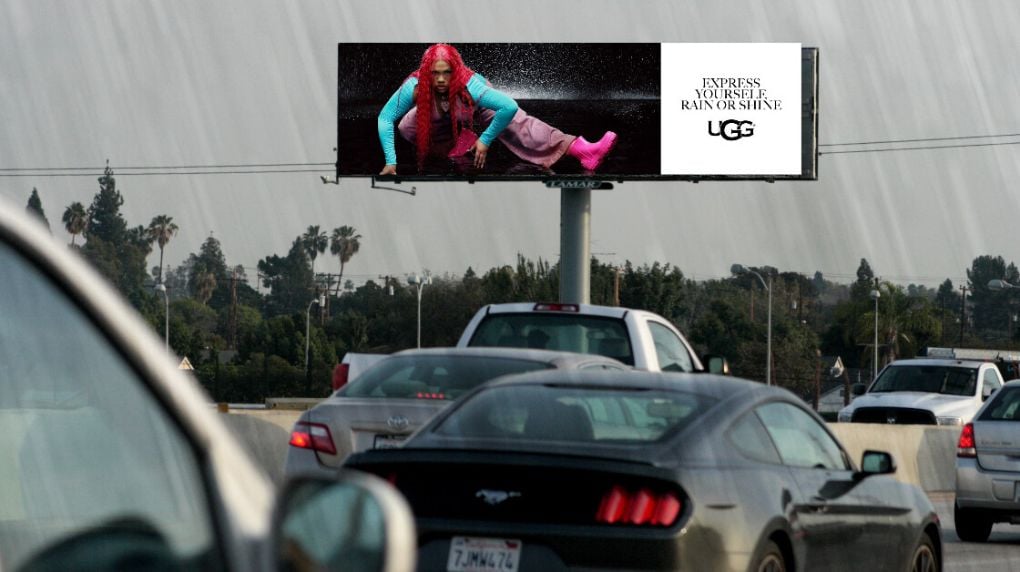
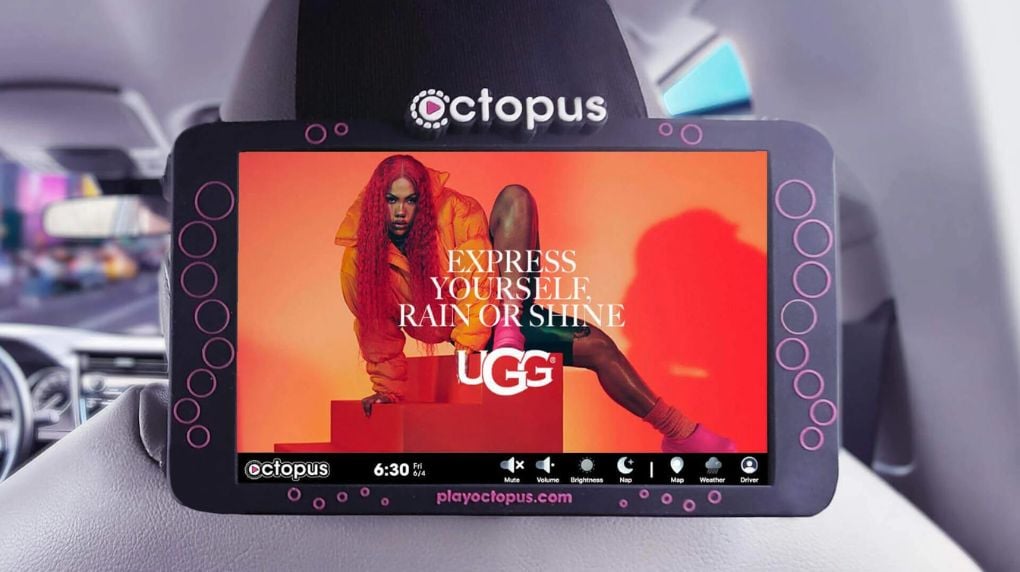
Footwear brand UGG used programmatic DOOH ads on billboards and seatback screens to reach customers as they moved through their day. The campaign produced a 6% lift in purchase intent for the UGG Rain collection — illustrating how DOOH can support measurable performance objectives, not just brand awareness.
Two Major Tom campaigns illustrate how B2B and B2C programmatic advertising work in practice. Seneca College, a post-secondary institution, needed to reach prospective students at scale across a competitive recruitment landscape. Programmatic display allowed us to target the right demographics across hundreds of premium publishers simultaneously — something a direct-buy strategy couldn't replicate at the same efficiency. Year-over-year, programmatic optimization drove Q3 cost-per-lead down 38% and cost-per-click down 28%.
On the B2C side, Rieker saw a 73% year-over-year increase in retail distributor sales. This was a strong recovery from an original -13% pre-campaign decline. This was just one the many positive results campaign of this which has set a new industry benchmark with its award wins.
The contrast between the two campaigns shows the range of what programmatic can do — recruitment cost efficiency on one side, eCommerce demand generation on the other.
Launching a programmatic advertising campaign comes down to six steps:
Every advertising campaign starts with clear goals and a budget. This determines which type of programmatic is right and how much to spend on each. The stronger you are at budgeting your paid media costs, the better the ROI on the campaign. Our guide also covers how to apply programmatic fundamentals to drive better paid advertising ROI.
Choose ad types that match the campaign objective. Display ads, video ads, native ads, and audio ads each have different strengths — and the strongest campaigns typically mix formats rather than relying on one.
Once you know which formats to use, select a DSP. Major platforms include The Trade Desk, Amazon DSP, DV360 (Google), MediaMath, and others. Fee transparency matters here — DSP take rates vary widely, and understanding what percentage of spend reaches publishers vs. intermediaries directly affects ROI.
Choosing the right tools is essential for running successful programmatic campaigns. This means finding a data management platform (DMP) or customer data platform (CDP) that can collect, organize, and analyze user data efficiently — plus an ad verification tool to ensure your ads meet industry standards and run in brand-safe environments.
Targeting is essential to programmatic success. Refine parameters like location, age, gender, behaviour, and interests — and integrate first-party data (CRM, customer lists) for the strongest signal. First-party data is now the most durable targeting asset given Apple ATT on iOS, even after Google reversed its plan to deprecate third-party cookies on Chrome in October 2025.
Monitor the campaign as it runs and adjust targeting, creative, and budget to maximize results. The optimization loop is what separates programmatic campaigns that produce strong ROI from ones that don't — automation lets you make changes faster, but only if someone is paying attention to the data.
If you're ready to take things further, advanced strategies of programmatic display advertising covers what comes after the fundamentals. And whether to run programmatic in-house or with a specialist partner is a decision worth thinking through — our companion post on in-house vs. agency for paid media walks through both sides. For the broader strategic frame, how to incorporate programmatic into your media planning strategy ties it together.
Stop spending time and budget on the wrong channels. Major Tom can help you generate positive returns sooner, using strategic programmatic processes that deliver proven results. We've run B2B and B2C programmatic campaigns across recruitment, eCommerce, retail, B2B SaaS, and institutional categories — and our paid media team brings the platform expertise, audience research, and creative system that turns programmatic from a budget line into a growth lever.
Browse some of our work for inspiration, and reach out when you're ready to find clarity in the chaos of programmatic complexity.
Programmatic advertising is the automated buying and selling of digital ad inventory in real time, using software and algorithms rather than manual negotiation. Demand-side platforms (DSPs) match advertiser audiences to publisher inventory in milliseconds, replacing the back-and-forth of traditional media buying. Programmatic spans display, video, native, audio, connected TV, and digital out-of-home — all bought through the same underlying technology applied to different ad formats. Per EMARKETER, programmatic now accounts for over 90% of US digital display ad spending.
Programmatic advertising offers time savings through automation, scalability up or down as business demand shifts, improved audience targeting using data signals, more efficient use of ad spend by serving the right impression at the right time, and real-time performance insights for continuous optimization. For B2B programmatic advertising specifically, the precision of account-based targeting and the depth of intent data integration make programmatic particularly well-suited to long-cycle B2B campaigns where audience quality matters more than volume.
The four main types of programmatic advertising are: real-time bidding (RTB), the most common method, where advertisers bid on individual impressions in real-time auctions; preferred deals, prearranged agreements at a fixed price; private marketplaces (PMPs), invite-only auctions for premium inventory; and programmatic direct, where advertisers buy directly from publishers without going through the open exchange. According to EMARKETER, more than 91% of US programmatic display spend now flows through PMPs and programmatic direct combined.
Programmatic advertising connects advertisers with publishers through real-time auctions. When a user loads a webpage or app, an ad impression becomes available. The publisher's supply-side platform (SSP) sends a bid request with information about the impression — domain, ad specifications, available user data. Demand-side platforms (DSPs) evaluate the request and submit bids on behalf of advertisers in milliseconds. The winning bid is selected based on price and any existing priority agreements, and the advertiser's ad server delivers the creative to the user's device — all in less time than it takes the page to finish loading.
Display advertising is a category of ad format — banner, native, rich media, and similar visual ads displayed on websites and apps. Programmatic advertising is a method of buying — the automated, auction-based purchasing of digital ad inventory through DSPs. Most display ads today are bought programmatically, but programmatic also extends to video, audio, connected TV, and digital out-of-home formats. The cleanest framing: display is what the ad looks like; programmatic is how the ad gets there.
Start with clear goals and a budget. Choose creative ad types that match the campaign objective (display, video, native, audio, or a mix). Select a DSP based on inventory access, fee structure, and platform capabilities. Choose supporting tools including a data management platform and ad verification. Refine your targeting parameters with first-party data plus platform signals. Then monitor and optimize continuously as the campaign runs — programmatic rewards active management, not set-and-forget execution.
B2B programmatic advertising offers precision targeting at scale that direct-buy strategies can't match — particularly for account-based marketing programs that need to reach specific accounts or job titles across the open web. Programmatic also gives B2B advertisers access to richer measurement, helping connect ad exposure to pipeline and revenue in ways that mass-market display can't. Seneca College's recruitment campaign is a strong example: programmatic optimization drove Q3 cost-per-lead down 38% year-over-year while expanding reach into new audience segments.
The better the data you look at, the better the decisions you'll make.